 Nathan Allen
The idea
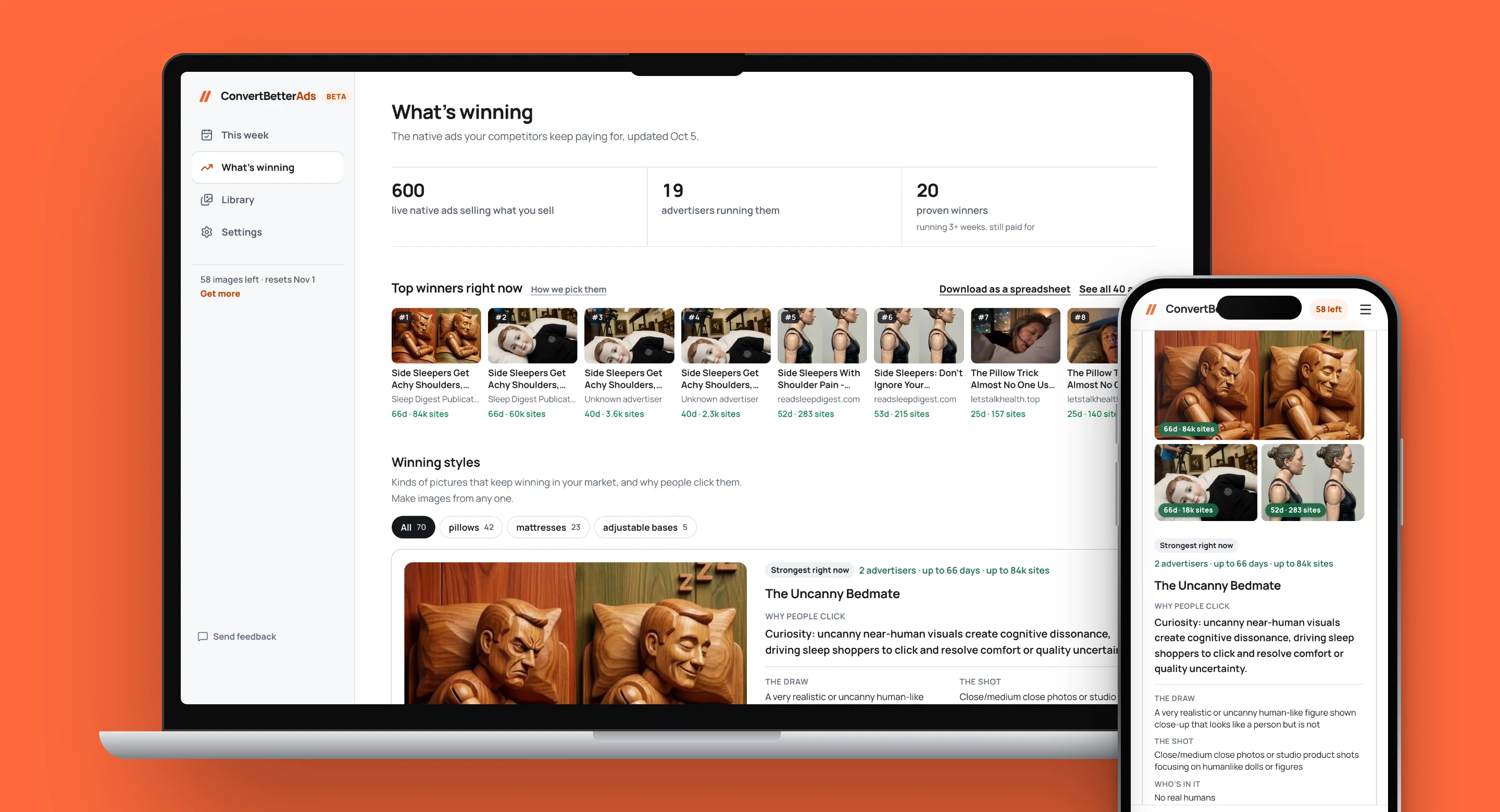
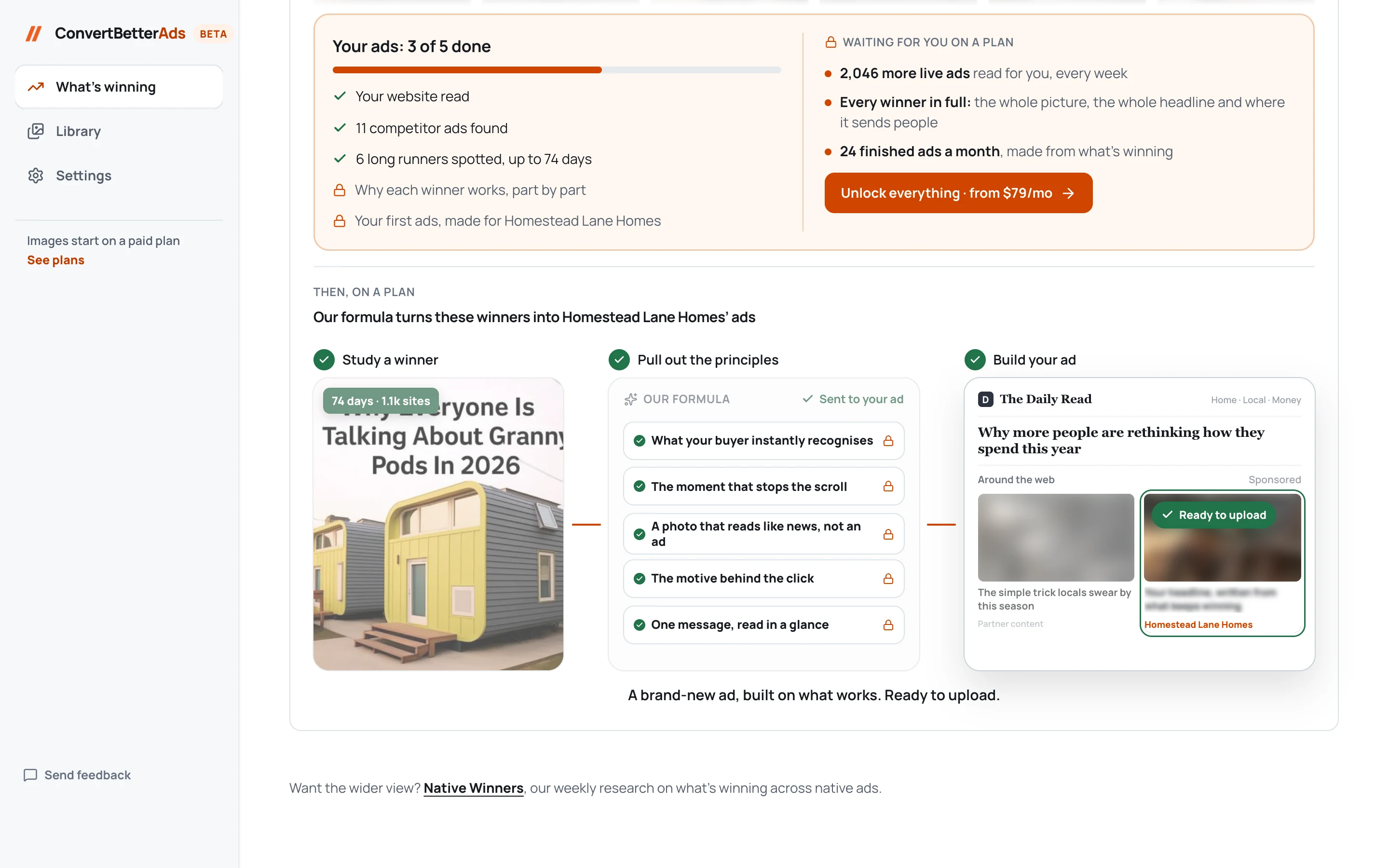
Nobody keeps paying for an ad that loses money. On Taboola and Outbrain most ads get switched off within days. The few still running after weeks, bought across hundreds of sites, are making someone money. When several advertisers in the same space land on the same kind of picture and the same kind of hook, that’s a pattern worth building on.
Years of running native ads taught me which patterns keep winning and why. The product does that reading at scale, finds the patterns, and delivers finished ads built on them. The customer pastes their website and that’s their whole job.
Designing for people who don’t want to design
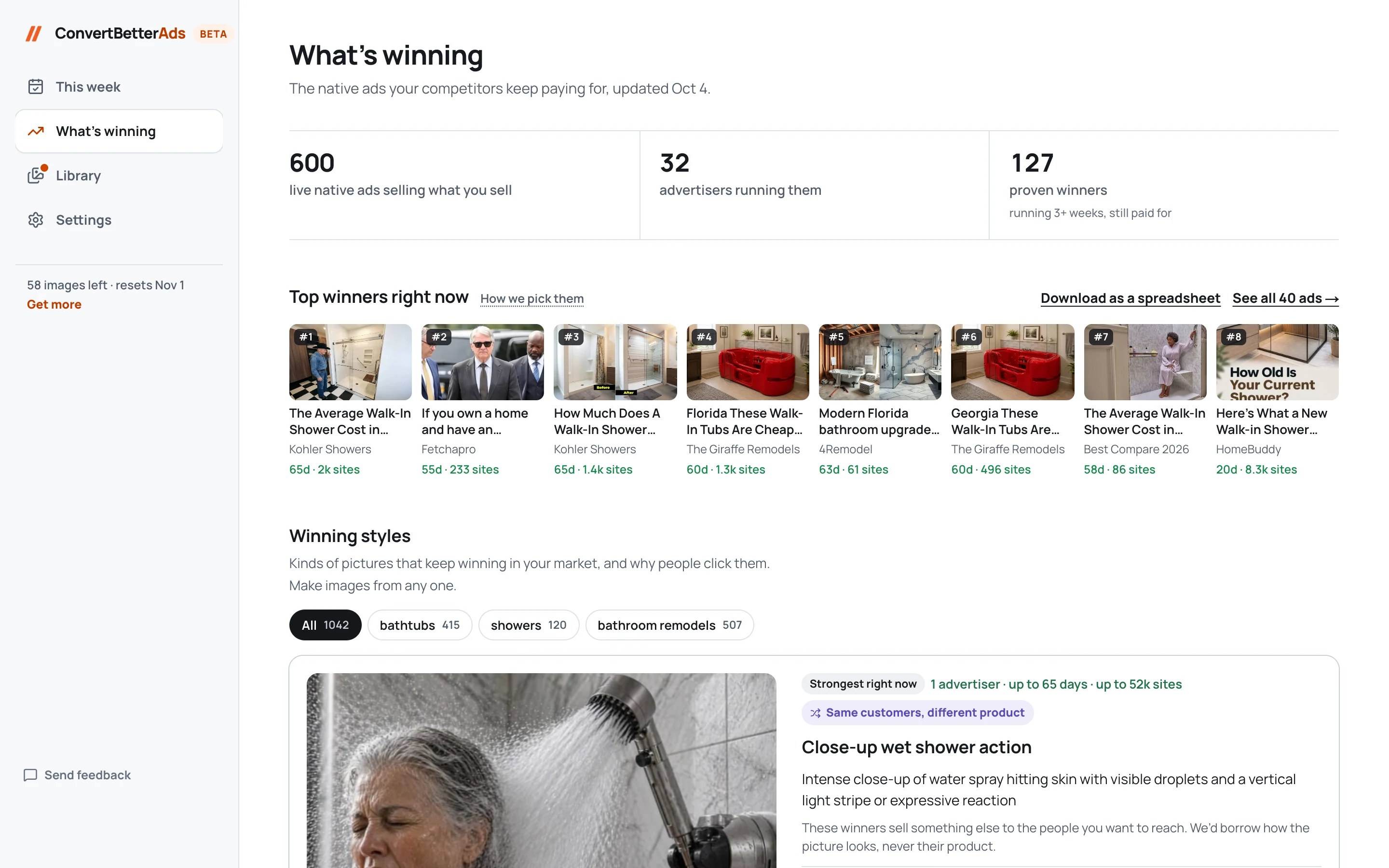
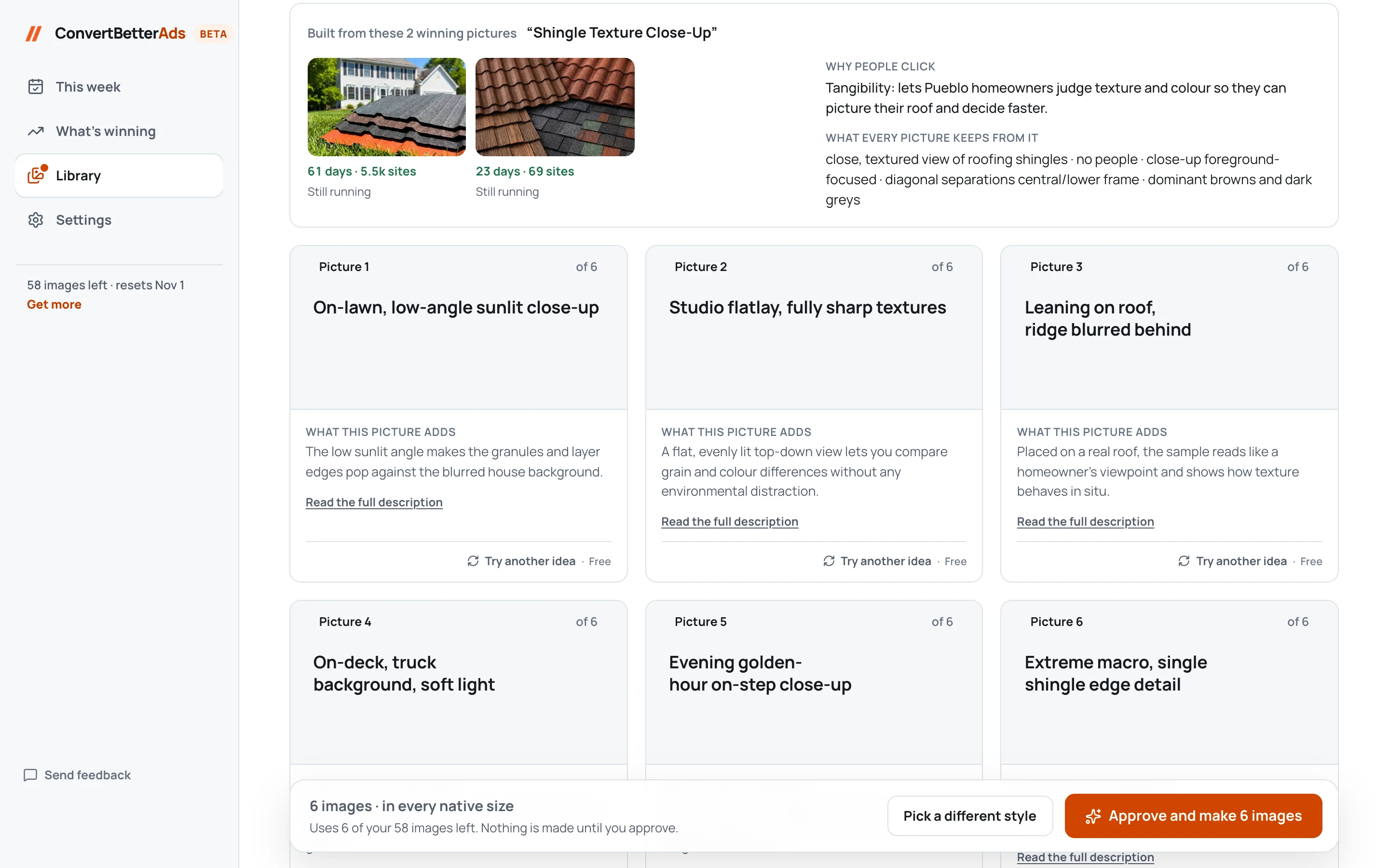
The customer is a business owner already spending on native ads. They don’t want an editor, templates or a brief. So the product has none of those. You confirm what you sell with one tap, and new images arrive every week in every size the networks use. If one isn’t right you report it and we fix it.
Saying no was most of the design work. I cut Facebook and Google Display to focus on native. I left out results tracking. I left out an editor on purpose. Each of those would have made a better demo and a worse product.
Making AI images good enough to ship untouched
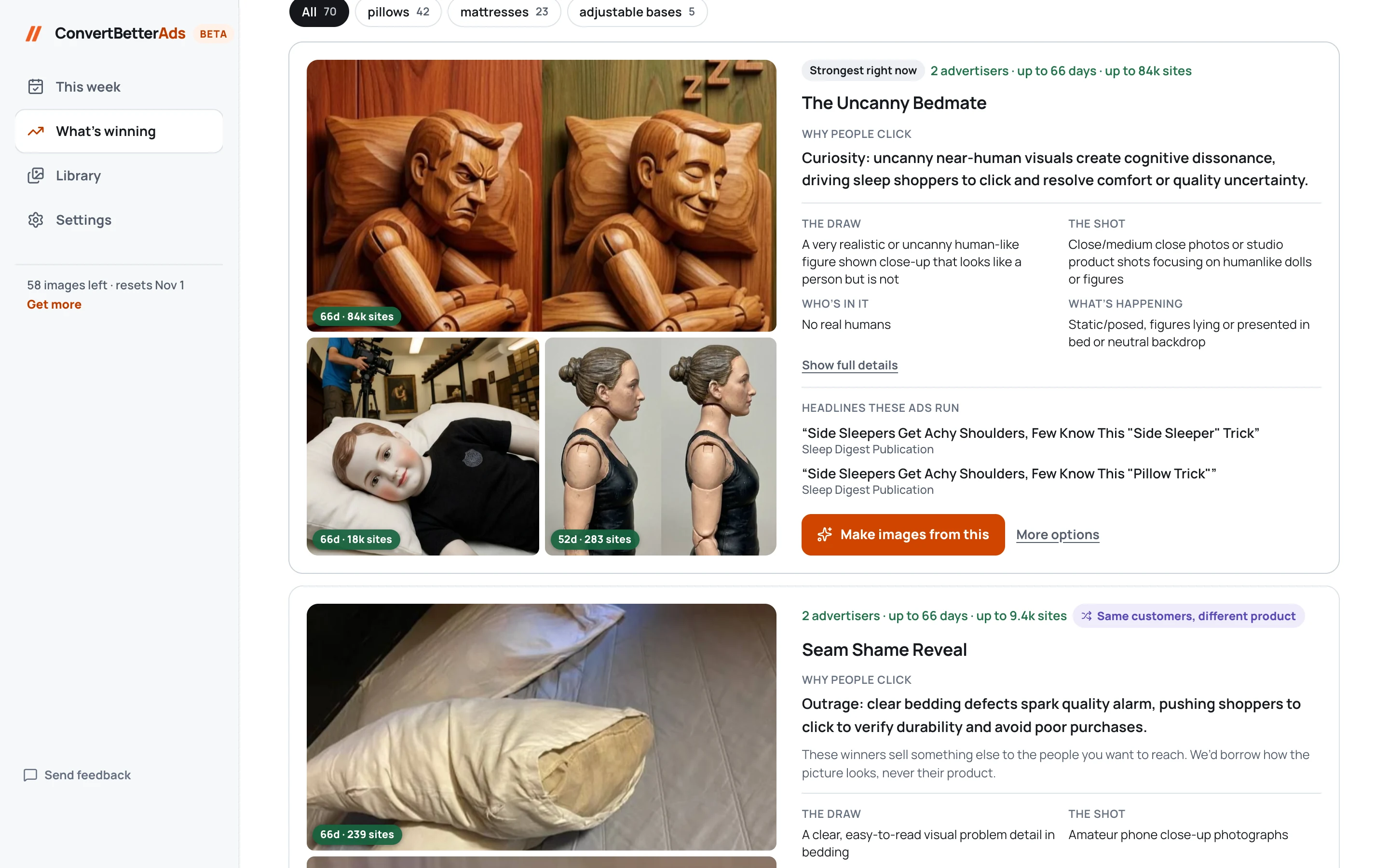
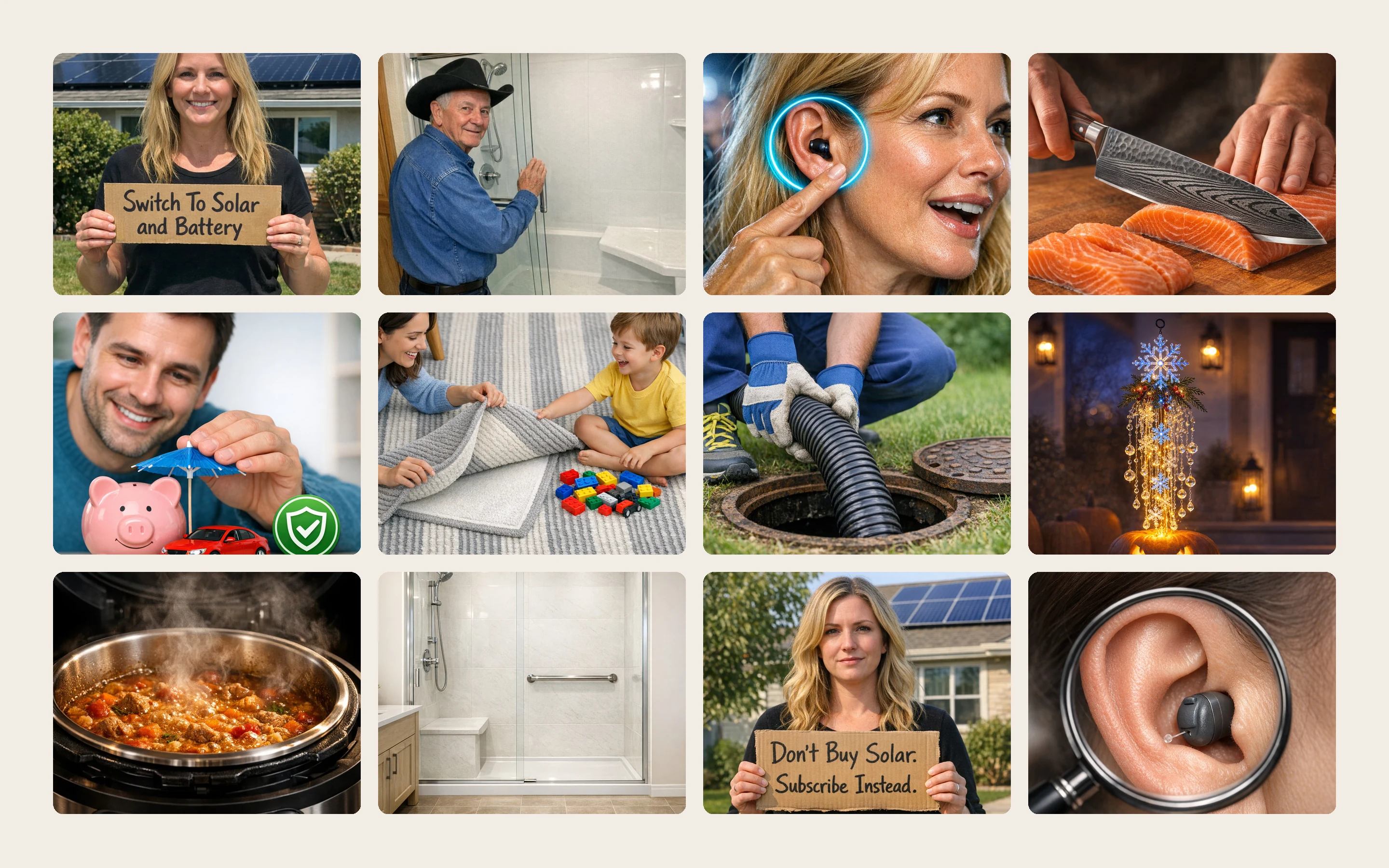
The hard part was quality. The customer won’t fix anything, so every picture has to be usable as delivered. I rebuilt the image pipeline more than twenty times. It studies the long-running winners as pictures, not headlines: who’s in the frame, where they’re looking, day or night, candid or polished, whether the product shows up at all. Then it writes a short brief for a brand-new picture that keeps the idea and swaps in the customer’s business.
Every image goes through two automated checks before anyone sees it. One scores how obviously AI it looks. The other checks it against the ad rules of six native networks, because a picture that gets rejected is worthless. A picture that fails gets remade, or refunded.
I also built a Prompt Lab: frozen test companies, prompt drafts I can compare side by side, and one-click releases with rollback. Prompt quality is the product, so I made it something I can tune in minutes without a deploy.
Finding the right customer
I started out selling to local businesses. Early on it was clear most of them didn’t know how to run native ads at all, let alone want twenty new ones. So I pulled the live leaderboard: 3,304 US advertisers bought Taboola placements in the last thirty days. Those people already understand why fresh creative matters. That became the market.
The free weekly page, What’s winning, and a Monday newsletter called Native Winners do the selling. They show the research for free and the ads are what you pay for.
What I learned
Building a product alone with AI coding tools is fast, and it’s easy to build the wrong thing fast. Writing down what the product is not, and checking every idea against that list, saved me more time than any tool did.
It’s in beta now with live billing. I’m still tuning the image pipeline every week.